Thor Character Analysis: The God of Thunder’s Journey from Arrogance to Wisdom
The Thor character analysis begins with a god who had everything and had to lose it to learn anything. Thor debuted in Journey into Mystery #83 in 1962, created by Stan Lee, Jack Kirby and Larry Lieber. He is the Asgardian God of Thunder, son of Odin and wielder of Mjolnir, the hammer that only the worthy can lift. His story has always been about one question: what makes someone worthy?
The Arrogant Prince Banished to Earth
When readers first met Thor, he was a proud and arrogant prince who believed his birthright made him worthy. Odin disagreed, and banished him to Earth to learn humility. That fall from grace is the foundation of the character. Thor had to earn his power instead of inheriting it, and the lesson never really ended. Every great Thor story since then has returned to the same idea: worthiness is earned, not inherited.
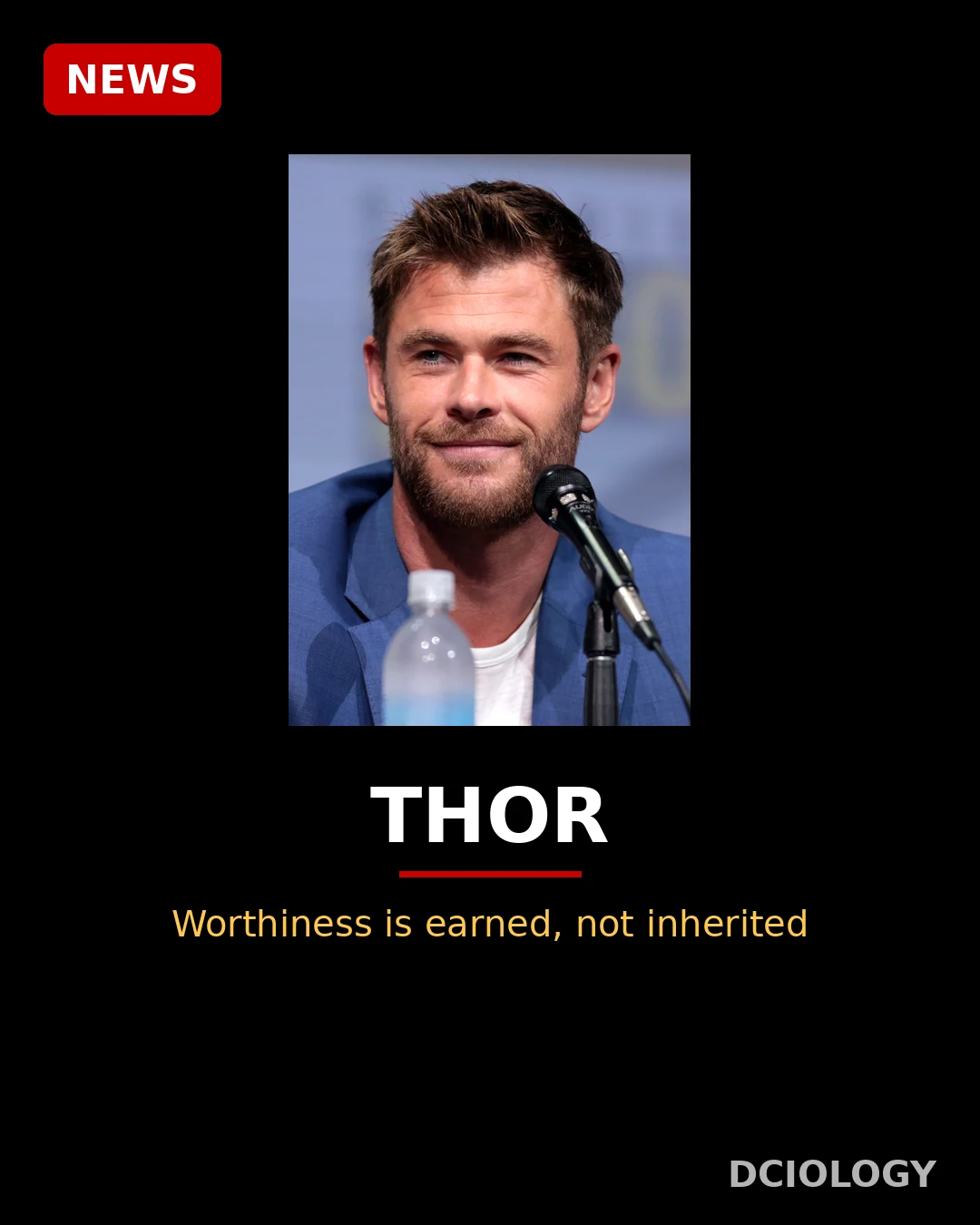
Chris Hemsworth has played Thor in the Marvel Cinematic Universe since 2011, and his screen arc follows the same path. In Thor (2011), he is the arrogant prince banished to Earth. The film strips away his power and his pride, and he only regains Mjolnir when he proves himself willing to sacrifice for others. It is the same lesson as the comics, told in a single film, and it set the tone for everything that followed.
The Thor Character Analysis: Simonson, Aaron and the Worthy Question
In the comics, Thor’s defining runs include Walt Simonson’s 1980s run, which gave the character some of his most famous stories. Jason Aaron’s run went further, with Thor: God of Thunder, the arc where Thor became unworthy and lost Mjolnir, and the story of Jane Foster becoming Thor. The unworthy arc asked the hardest version of the question. If the god of thunder loses his hammer, is he still Thor? Aaron’s answer was yes, because worthiness lives in the person, not the weapon.
The Thor character analysis keeps returning to that idea. Jane Foster picking up the hammer proved that worthiness is not about birth or blood. It is about character. That is why the run mattered so much to readers. It took a hero defined by his weapon and showed that the weapon was never the point. Thor without Mjolnir was still Thor, and that made him more interesting, not less.
Loss, Grief and the Search for Purpose
The Thor character analysis on screen follows the same pattern of loss and learning. Thor’s journey continued through the loss of Asgard in Thor: Ragnarok, when Hela destroyed Mjolnir and his home. Stormbreaker replaced the hammer, but it could not replace what he had lost. The grief of Avengers: Infinity War and Avengers: Endgame pushed him further, and Thor: Love and Thunder found him searching for purpose. Each film took something from him and asked what was left. The answer, every time, was that Thor keeps going.
The Thor character analysis always comes back to this: Thor is a god who grieves, fails and gets up again. He is not wise because he was born wise. He is wise because he has been broken and rebuilt so many times. The arrogant prince of 1962 and the weary hero of the modern films are the same person, separated by decades of loss and learning. The journey from arrogance to wisdom is the whole story.
Thor’s Future and Avengers: Doomsday
The Thor character analysis ends with Thor expected to appear in Avengers: Doomsday, due on December 18, 2026, and his presence there matters. He is one of the few original Avengers still standing, and he carries the weight of everything the team has lost. Whatever the film asks of him, it will test the same question his stories have always asked. Is he worthy? After everything he has been through, the answer is no longer in doubt. Thor has earned his place, and his story is far from over.
Read more: Avengers Doomsday release date and cast | Thanos character analysis