Thanos Character Analysis: Inside the Mind of Marvel’s Mad Titan
Thanos Character Analysis: Who Is the Mad Titan?
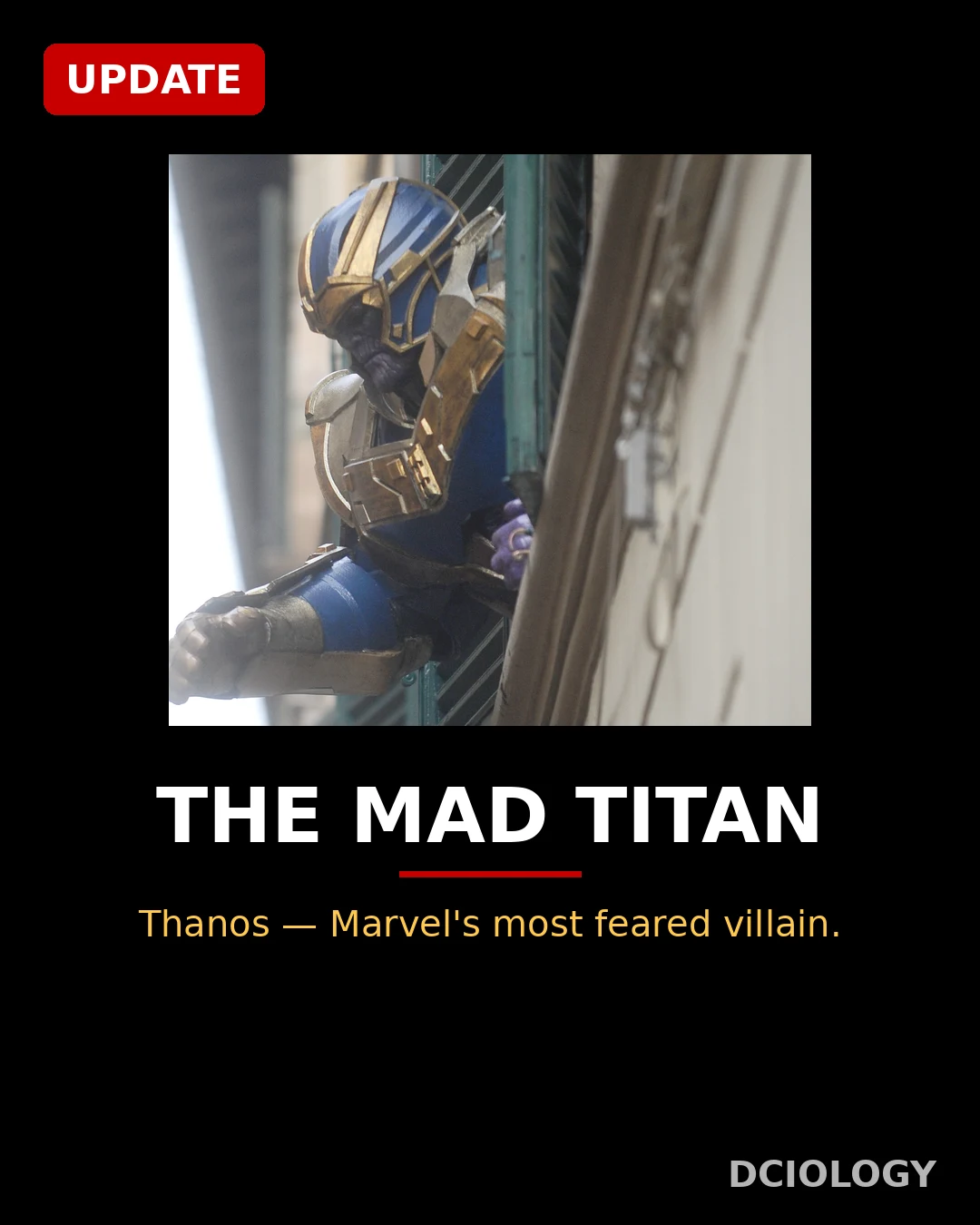
Thanos first appeared in Iron Man #55 in 1973, created by writer and artist Jim Starlin, who dreamed him up in a college psychology class. His name comes from Thanatos, the Greek personification of death, a link that runs through everything he does. Born on Titan, Saturn’s moon, Thanos is an Eternal carrying the Deviant gene, which left him purple-skinned and hulking in a society that prized beauty. His own people shunned him, favouring his handsome brother Eros, and that rejection became the wound at the centre of his life.
Exiled after forbidden experiments, Thanos turned his genius toward conquest and his heart toward Death herself, the literal embodiment of death in the Marvel Universe. He fell in love with her, and every war since has been, in his mind, a gift to win her favour. This Thanos character analysis has to start with that obsession, because it explains what makes him different from a conqueror who simply wants a throne: Thanos wants to be loved by death itself.
The Infinity Gauntlet and Thanos Character Analysis
Thanos spent years collecting power, first chasing the Cosmic Cube, a device that could reshape reality, and then learning of the six Infinity Gems. Each gem controls an aspect of existence, and together they grant their bearer power greater than any god. In the 1991 event Infinity Gauntlet, by Starlin with art by George Perez and Ron Lim, Thanos assembled all six into a golden glove and erased half of all life in the universe with a snap of his fingers.
The snap was not about resources or revenge. In the comics, it was a love letter to Mistress Death, proof Thanos could give her the greatest gift imaginable. The heroes who stood against him were outmatched, and Thanos defeated them almost casually, until his own nature undid him. He left openings on purpose, toying with his enemies, and that arrogance gave Adam Warlock, the Silver Surfer and Earth’s heroes the chance to take the Gauntlet away.
Thanos Character Analysis: Why He Always Defeats Himself
The most fascinating part of any Thanos character analysis is that he is his own worst enemy. Starlin built a nihilist at heart: a man who believes, deep down, that no one deserves complete victory, least of all himself. Time and again, Thanos reaches omnipotence and sabotages it, leaving a flaw in his plan or a gap in his defences, as if some buried part of him knows he should lose.
That self-defeat is what makes him feel real. A villain who simply wants power is a plot device, but Thanos is a philosophy in purple skin: a genius who decided the universe was broken and concluded only he could fix it, even if fixing it meant destroying it. His defeats never humble him for long, because he does not see them as failures, only proof the universe is not ready for his vision, and he simply starts planning again.
Why Thanos Character Analysis Still Endures
The films remade Thanos for a new audience, and the changes made him even more famous. In Avengers: Infinity War and Endgame, played by Josh Brolin, his motive shifted from love of Death to twisted mercy: Titan had starved from overpopulation, so he would save the universe by killing half of it. The comics version would call that a simplification, but the core is identical: a man so certain he is right that mass murder feels like heroism to him.
That certainty is why, in this Thanos character analysis, he endures as Marvel’s greatest villain. He is not a monster who enjoys cruelty; he is a thinker who has reasoned his way to atrocity and cannot be argued out of it. Heroes can punch him, outsmart him and even kill him, but they cannot make him doubt himself, and that is terrifying. More than fifty years after Iron Man #55, the Mad Titan still sets the standard every Marvel villain is measured against, because he asks the hardest question a villain can ask: what if the villain is right?
Mister Sinister Character Analysis | Doctor Doom Character Analysis | Magneto Character Analysis