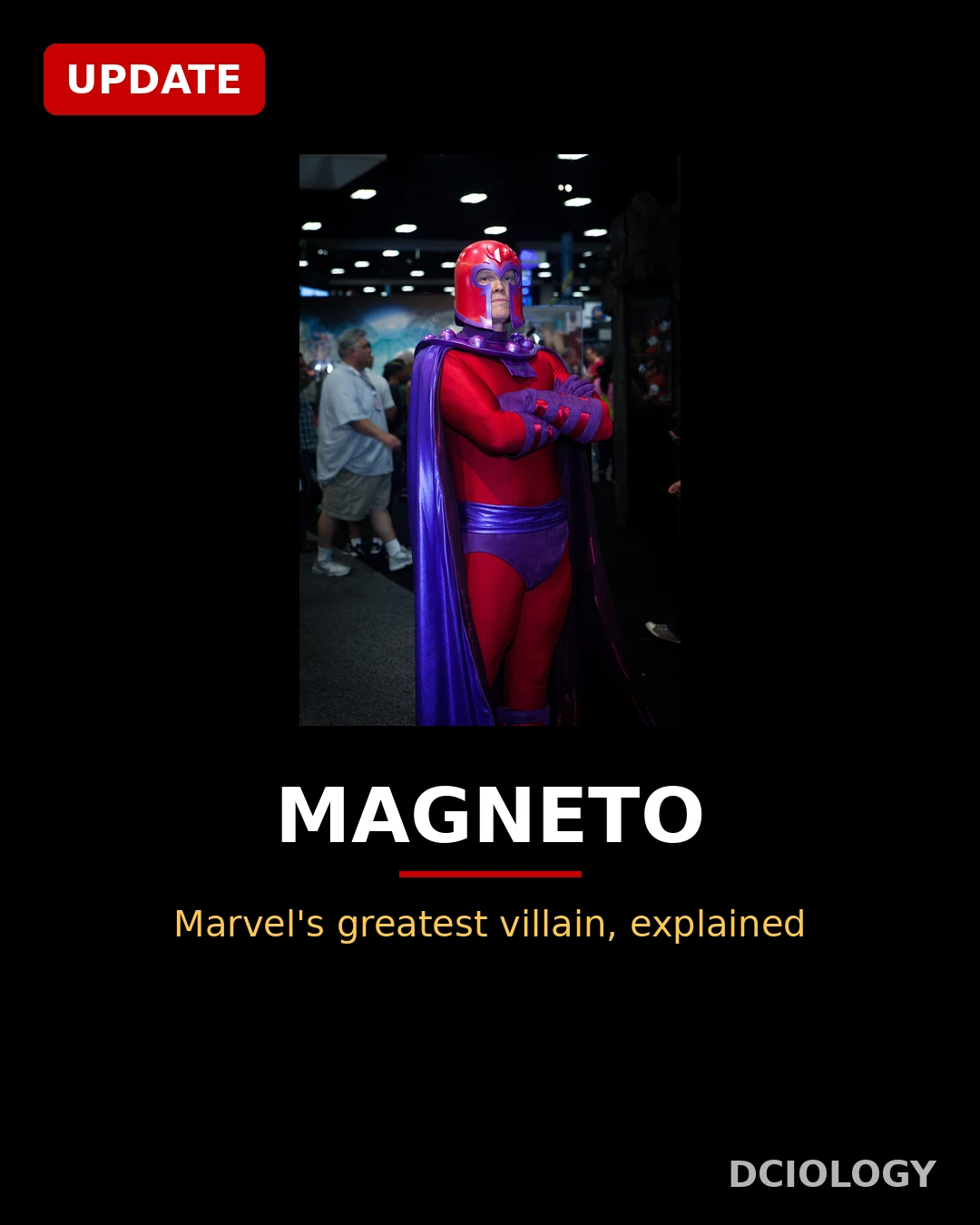
Magneto Character Analysis: Why Marvel’s Greatest Villain Endures
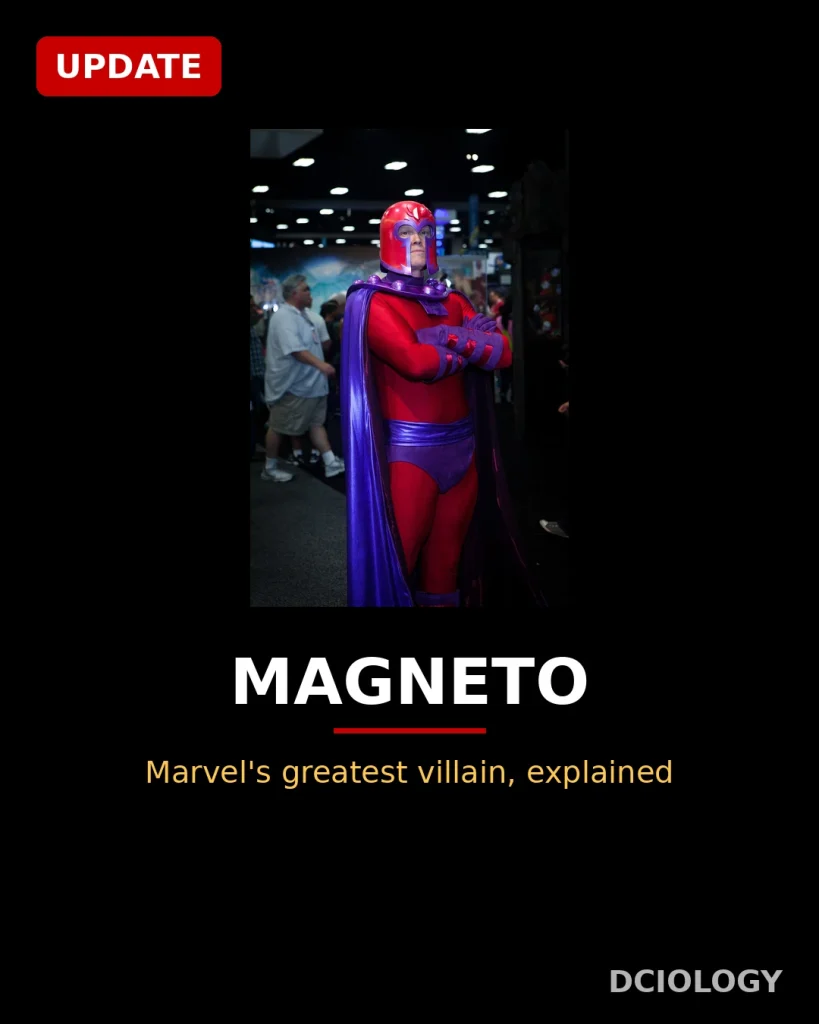
Magneto Character Analysis: The Villain With a Point
Every great villain needs a reason, and Magneto has the best reason in comics: he is not wrong about the danger, only about the answer. Born Max Eisenhardt, a Jewish boy who survived Auschwitz, Magneto watched the world try to destroy his people for being different. When he saw the same hatred turning toward mutants, he decided never again would mean never again, whatever it took.
That is what separates Magneto from almost every other comic book villain. Doctor Doom wants to rule the world, and the Joker wants to watch it burn. Magneto wants to save his people, and he is willing to do terrible things to do it. Readers can disagree with his methods while understanding why he chose them. A Magneto character analysis has to start there, because that moral tension is the whole character.
His powers fit his story perfectly. Magneto controls magnetism, which means he controls metal, the stuff of weapons, machines and cages. His helmet protects him from telepaths like Professor X. But his real power is his conviction: he has never doubted that mutants need a protector willing to fight.
Magneto Character Analysis: From X-Men Number 1 to Malcolm X
Magneto first appeared in X-Men number 1 in September 1963, created by Stan Lee and Jack Kirby as the very first enemy of the X-Men. In those early stories he was a fairly simple villain, a mutant terrorist with a helmet and a Brotherhood of Evil Mutants, but over the decades writers kept adding depth, and any serious Magneto character analysis has to follow that growth.
The turning point came when writers gave him his past. The revelation that Magneto was a Holocaust survivor changed everything: his fear of humanity was not paranoia but memory, and his militancy was not cruelty but survival. Professor X was modelled on Martin Luther King Jr., while Magneto echoed Malcolm X, arguing that the oppressed could not wait for their oppressors to change. A Magneto character analysis that ignores that parallel misses the point of the character entirely.
Later stories made him more complex: he has led the X-Men, ruled the island nation of Genosha, and even tried teaching at Xavier’s school, and each return to villainy feels like a tragedy.
Magneto Character Analysis: McKellen, Fassbender and the MCU Future
On screen, two great actors have found different truths in him. Ian McKellen originated the role in X-Men in 2000, bringing quiet, wounded dignity to an old man who had seen the worst of humanity and decided to answer it with strength. McKellen returns as Magneto in Avengers: Doomsday, opening on 18 December 2026, alongside Patrick Stewart’s Professor X.
Michael Fassbender played the younger Magneto from X-Men: First Class in 2011 through Dark Phoenix in 2019: angrier and more physical, a young man shaped by trauma and hunting the Nazis who destroyed his family. Together the two performances tell one life, Fassbender’s rage becoming McKellen’s resolve.
Now the role is about to change hands again. Morgan Spector, star of HBO’s The Gilded Age, is reportedly the frontrunner to play Magneto in Marvel’s X-Men reboot, due on 5 May 2028, although Marvel has not confirmed it. Whoever takes the role faces a high bar.
Why This Magneto Character Analysis Still Matters
Any honest Magneto character analysis ends with the same conclusion: his question has no easy answer. Professor X believes humans and mutants can live together; Magneto believes that is a dream, and dreams get people killed. Sixty years of comics have never settled the argument.
He also endures because he keeps changing. Magneto has been a terrorist, a teacher, a king, a father and a hero, sometimes in the same decade, and his daughter Polaris carries his powers and his legacy.
The best Magneto stories let him be right and wrong at the same time: a survivor who became a soldier, a victim who became a threat, and a villain who might be the only one telling the truth. Sixty years on, Marvel’s greatest villain still matters, because he asks the hardest question in comics.