Dune: Part Three: The Final Trailer, the December 18 Date and Why the Ending Divides Fans
Denis Villeneuve’s journey to Arrakis is almost over, and the final stretch is being marketed like an event rather than a release. Dune: Part Three arrives in theatres on December 18, 2026, completing the director’s adaptation of Frank Herbert’s saga with a film based on Dune Messiah, and Warner Bros. has now released its final full trailer. The trailer shows the tragic consequences of Paul Atreides’ holy war, and it has already sparked debate, because one of its central images appears to change a key relationship from Herbert’s novel. For a franchise built on fidelity to its source, that is not a small talking point. It is the whole conversation.
The setup is stark. Part Three picks up nearly two decades after Dune: Part Two, with Paul Atreides, played by Timothée Chalamet, now ruling as a ruthless emperor. The holy war fought in his name has cost billions of lives, and the film, in Villeneuve’s own framing, is less a triumphant conclusion than a sophisticated epilogue. That word matters. Villeneuve has repeatedly said he does not see the film as simply the completion of a trilogy. It is an examination of what happens after victory curdles into tyranny, when a hero who once fought for survival becomes the very power others must survive. The returning cast includes Zendaya as Chani, Florence Pugh as Princess Irulan, Rebecca Ferguson, Jason Momoa, Javier Bardem, Charlotte Rampling and Anya Taylor-Joy, with Robert Pattinson joining the ensemble.

The final trailer’s most discussed choice is the apparent confrontation between Paul and Chani. In Herbert’s Dune Messiah, Chani’s role is defined by loyalty and by a tragedy that is quieter than a battlefield showdown. The trailer, by contrast, frames Paul and Chani as if squaring off against each other, a shift that has left some readers nervous and others intrigued. Villeneuve has never been a literal adapter. His Dune films have rearranged timelines, merged characters and sharpened themes, always in service of a cinematic argument about power and prophecy. The question for Part Three is whether this change deepens Herbert’s point, that Paul’s prescience traps everyone around him, including the woman he loves, or whether it turns a novel of political and personal consequence into a more conventional conflict. We will only know when the film is seen in full, but the trailer has done its job: it has made the ending feel uncertain again.

That premium push is partly forced by the calendar. December 18 is also the release date for Avengers: Doomsday, after that film was delayed from its original spot. Warner Bros. claimed the date first, and the two films will now compete for the same large-format screens in the busiest moviegoing weeks of the year. Villeneuve’s film has its IMAX deal to protect it, but the head-to-head remains one of the most fascinating box-office stories of the season: a dense, philosophical science-fiction epic against the biggest superhero event Marvel has mounted in years. Presales for Part Three have already shown strength, with IMAX 70mm tickets selling out in minutes when they first went on sale in April, eight months before release.

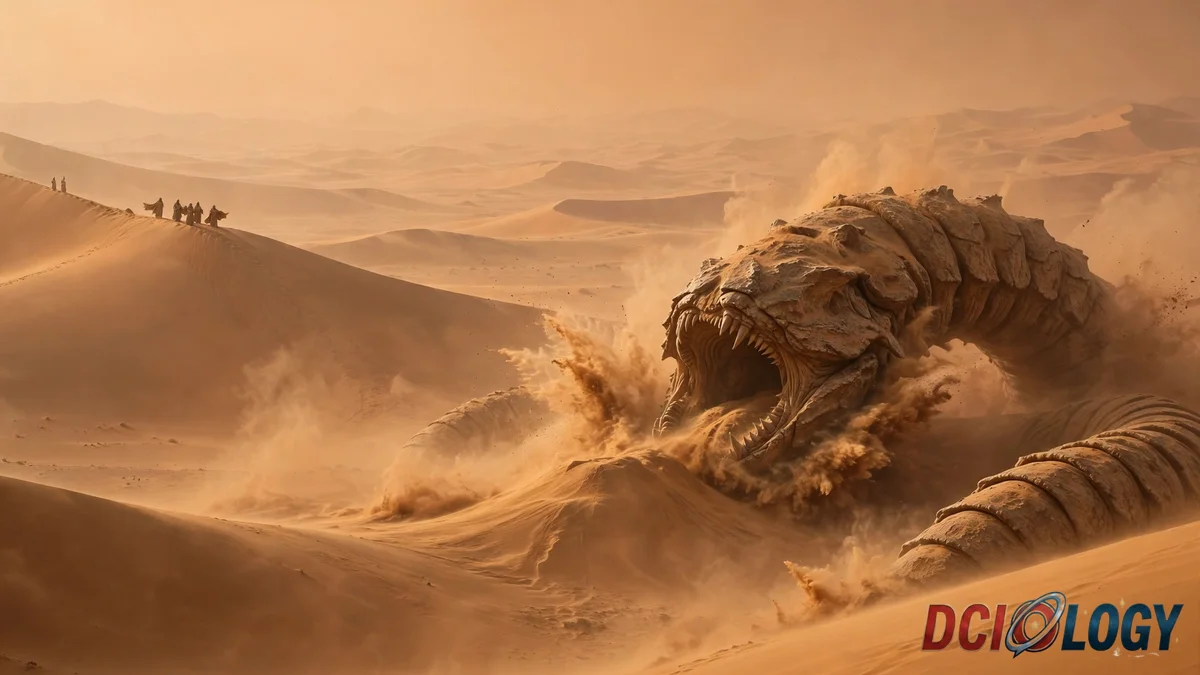
For now, though, the desert comes first. A new attraction, Dune: The Experience, opens November 20 in downtown Los Angeles and runs through December 20, offering giant sandworms, real props and a chance to sit on Paul’s throne. It is the kind of marketing that only makes sense when a studio believes a film is a cultural moment, not just a release. Whether Part Three lands as a satisfying ending or a provocative departure, it will be argued about for years, which is exactly what Herbert’s novels have always invited. The spice, as ever, must flow, but Villeneuve’s final question is harder: what does it cost the man who controls it?