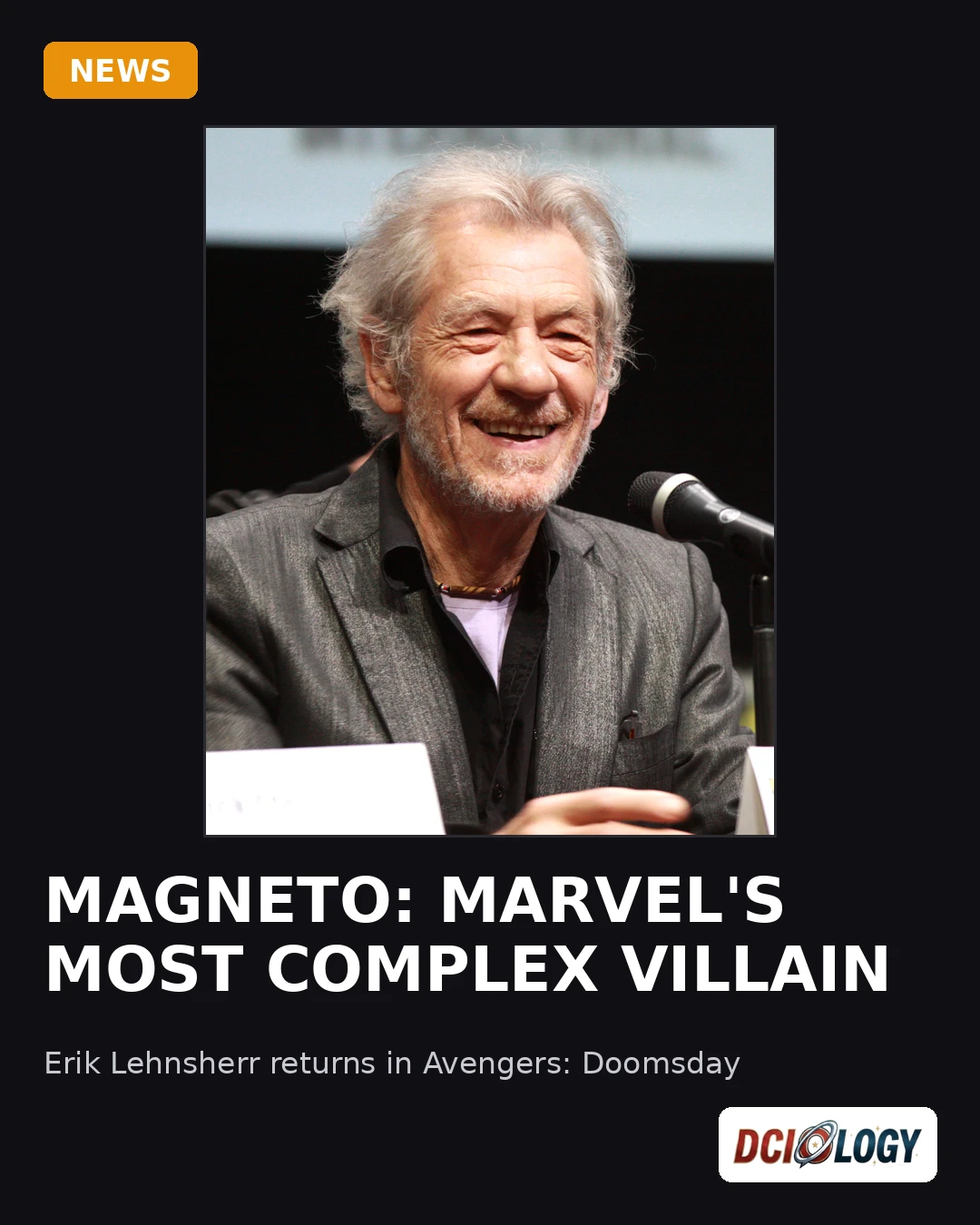
Magneto Character Analysis: Why Erik Lehnsherr Is Marvel’s Most Complex Villain
No Marvel villain has ever been this hard to call a villain. This Magneto character analysis looks at Erik Lehnsherr, the Master of Magnetism, a man who survived the Holocaust, built a mutant nation, and spent sixty years arguing that survival justifies almost anything. He is back on screen in Avengers: Doomsday on December 18, 2026, with Ian McKellen returning to the role he first played in 2000. Doom is a villain who believes he is saving the world, and Magneto has believed the same thing for sixty years.
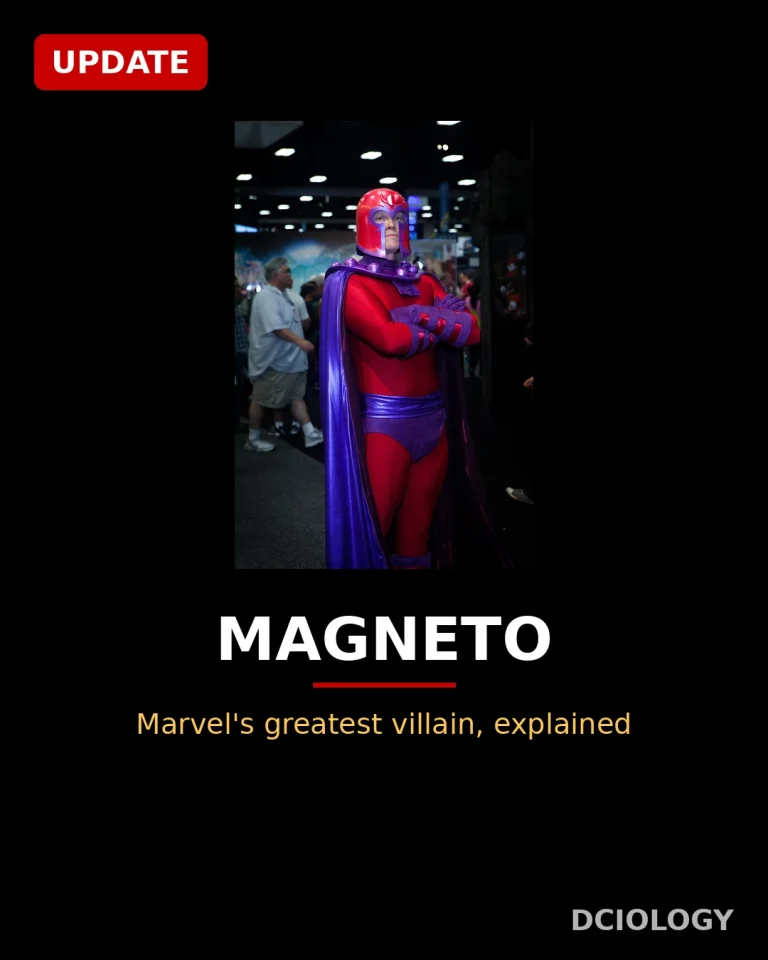
Magneto debuted in X-Men #1 in September 1963, created by Stan Lee and Jack Kirby, and he was the X-Men’s first enemy. His power is control over magnetism: almost all metal, the Earth’s magnetic field, and, in his most extreme feats, the iron in human blood. But the power was never the point. Magneto looked at a world that feared mutants and decided that fear was a promise: what humans did once, they would do again, and the only answer was mutant power, openly claimed.
Magneto Character Analysis: The Survivor
Erik Lehnsherr’s origin is the most serious in comics. He is a Jewish Holocaust survivor who watched his family murdered in Auschwitz, and the films made that history the core of the character: the young Erik bending a metal gate in the camps is the most famous scene in the first X-Men film. That history is why this Magneto character analysis cannot treat him as a simple villain. His fear is not paranoia. It is memory. Every time he says humans will come for mutants, he is describing something he has already lived through. He is not wrong about the danger, only about the answer.
His friendship with Charles Xavier is the other half of him. Both want a world where mutants are safe, and disagree about everything else. Xavier believes in coexistence; Magneto believes in separation, or dominance. Our Professor X character analysis covers the dreamer; Magneto is the realist who looked at the same world and chose the harder answer. The best X-Men scenes are not fights but arguments between the two old friends, usually over a chessboard.
Magneto Character Analysis: King, Terrorist, Hero
Across six decades of comics, Magneto has been all three. He founded the Brotherhood of Mutants and fought the X-Men as a terrorist. He ruled the mutant nation of Genosha and the Asteroid M sanctuary. He led the X-Men himself when Xavier was gone. In House of M he stripped the powers of nearly every mutant on Earth, then spent years trying to atone. Our Cyclops character analysis shows a hero who never doubts his cause; Magneto doubts his constantly, and that is what makes him feel real. He has been a villain, a head of state, a teacher and a penitent, and every version is the same man.
The films kept that complexity. McKellen’s Magneto is a gentleman terrorist, calm and certain; Fassbender’s younger version is angrier and more wounded. Both are recognisably Erik Lehnsherr, and closer to the comics than most comic-book villains ever get. The Ghost Rider character analysis showed how Marvel’s tortured heroes carry their past; Magneto carries his the same way, except his is history itself.
What Doomsday Means for Magneto
Ian McKellen is returning as Magneto in Avengers: Doomsday, alongside Patrick Stewart’s Professor X, in Stewart’s final on-screen performance, as Marvel has confirmed. Kevin Feige explained why the original X-Men belong in Doomsday, calling it the culmination of a quarter-century of storytelling, and McKellen has teased his scenes, joking that he destroyed New Jersey the other day. The X-Men comic vs movie comparison covers the team’s transplant into the MCU, and Magneto is the test of whether it works.
The verdict is simple. Magneto endures because he is the rare villain whose argument you cannot dismiss, and that is the question this Magneto character analysis keeps coming back to: wrong about the solution, right about the fear, a tension that has carried sixty years of stories. Our Doctor Doom character analysis covers a villain who believes he is the hero; Magneto believes he is the survivor — a harder claim to argue with. When he puts the helmet on in Doomsday, the question will not be whether he is good or evil, but whether, after everything he has seen, he was right all along.