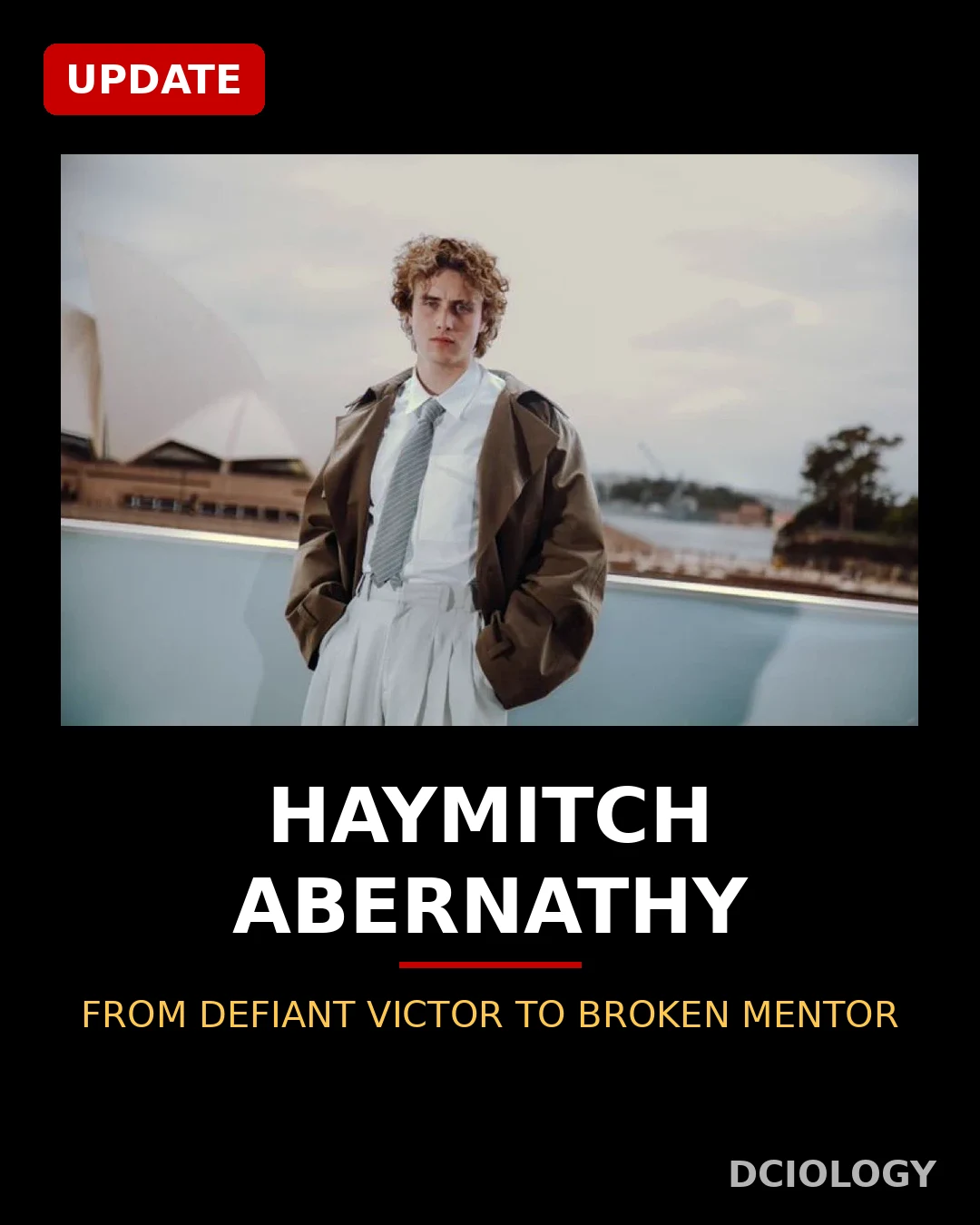
Haymitch Abernathy: The Hunger Games’ Most Tragic Hero Finally Gets His Story
For fifteen years, Haymitch Abernathy has been the Hunger Games saga’s drunk mentor — the man who stumbles onto the stage, insults his own tributes, and somehow still gets them out alive. Woody Harrelson made him unforgettable — and easy to dismiss. Sunrise on the Reaping, which opened Friday to $51 million, finally shows the boy behind the bottle — and a careful Haymitch Abernathy character analysis reveals that almost everything we laughed at was armour.
Adapted from Suzanne Collins’ 2025 novel, the film rewinds to the 50th Hunger Games, the Second Quarter Quell, where twice as many tributes were reaped and a 16-year-old Haymitch was thrown into the arena. Joseph Zada plays him defiant, quick-witted and furious — a teenager who refuses to play the Capitol’s game even while forced to win it. It is the same fire Harrelson carries, just before the world put it out.
The Victory That Cost Him Everything
Haymitch does not win the 50th Games by being the strongest tribute in the arena. He wins by being the smartest, turning the Capitol’s own arena against it in front of the cameras. His greatest triumph is also his greatest crime in the Capitol’s eyes. The Capitol does not forgive being embarrassed. It does not punish him directly — it takes the people he loves.
This is the hinge of the whole Haymitch Abernathy character analysis. The mentor of the original trilogy was not born bitter. He is a man who learned, at sixteen, that caring about anyone is a weapon his enemies can use. Every joke, every bottle is a lesson from the cruellest classroom. He survived the arena. The Capitol made sure survival felt like punishment.
Why the Drinking Was Never Just a Quirk
Watch the original films again after Sunrise on the Reaping, and the drinking reads completely differently. It is not comic relief. It is a man keeping himself numb enough to function, because sobriety means remembering what he lost. His sarcasm works the same way: keep everyone at arm’s length and nobody else can be taken from him. A Haymitch Abernathy character analysis reframes his cruelty to Katniss and Peeta: he is harsh because he cares too much, not because he cares too little.
Two Actors, One Broken Man
The most impressive thing about Sunrise on the Reaping is how Zada’s young Haymitch connects to Harrelson’s older one. Zada keeps the wit and the tactical brain, and the hope is still alive in him. Harrelson plays what is left when that hope has been ground down for twenty-four years. Side by side, the two performances show a person being hollowed out in slow motion. That is the core of this Haymitch Abernathy character analysis: boy and mentor, same person, twenty-four years apart. The swagger never leaves the older Haymitch — it just curdles into sarcasm, the defiance still buried underneath, waiting for a reason.
What It Means for the Franchise
Sunrise on the Reaping took $21 million in Thursday previews, the second-best behind Catching Fire, then powered to a $51 million Friday — on its way to a projected $110 million weekend. The audience score sits at 95 percent on Rotten Tomatoes, a franchise record, and the first reactions praised what makes it work: it treats Haymitch as a person, not a punchline. The lesson is clear: the Hunger Games does not need bigger arenas, just the stories hiding in the corners of the world Collins built. A prequel centred on a mentor just delivered the saga’s best audience score, as the official Lionsgate page confirms.
For Haymitch himself, his arc finally makes sense. The boy who lost everything to the Capitol grows into the man who helps destroy it — not by fighting again, but by doing the one thing he swore he would never do: caring about two tributes enough to keep them alive. Katniss and Peeta finish what his defiance started. That is why he is the saga’s most tragic figure — and, quietly, its most heroic. This Haymitch Abernathy character analysis ends simply. He was never broken beyond repair. He was just waiting for someone worth being brave for again.