Cyclops Character Analysis: Scott Summers, the X-Men’s Reluctant Leader
The First X-Man
Cyclops character analysis starts with a simple fact: Scott Summers was the first X-Man. Created by Stan Lee and Jack Kirby, he debuted in The X-Men #1 in September 1963 as the field leader of Marvel‘s brand-new mutant team. Professor Xavier recruited the teenage Scott first, saw his leadership potential before anyone else did, and made him the example the other X-Men would follow. Sixty years on, he is still the team’s conscience and commander.
Scott’s childhood explains the man. His parents died in a plane crash while he and his younger brother Alex parachuted to safety, and the head injury Scott suffered in the landing is linked to his lack of control over his powers. Orphaned, he ran away until Xavier found him and offered him a purpose: lead young mutants in a world that feared them.
A Power He Cannot Switch Off
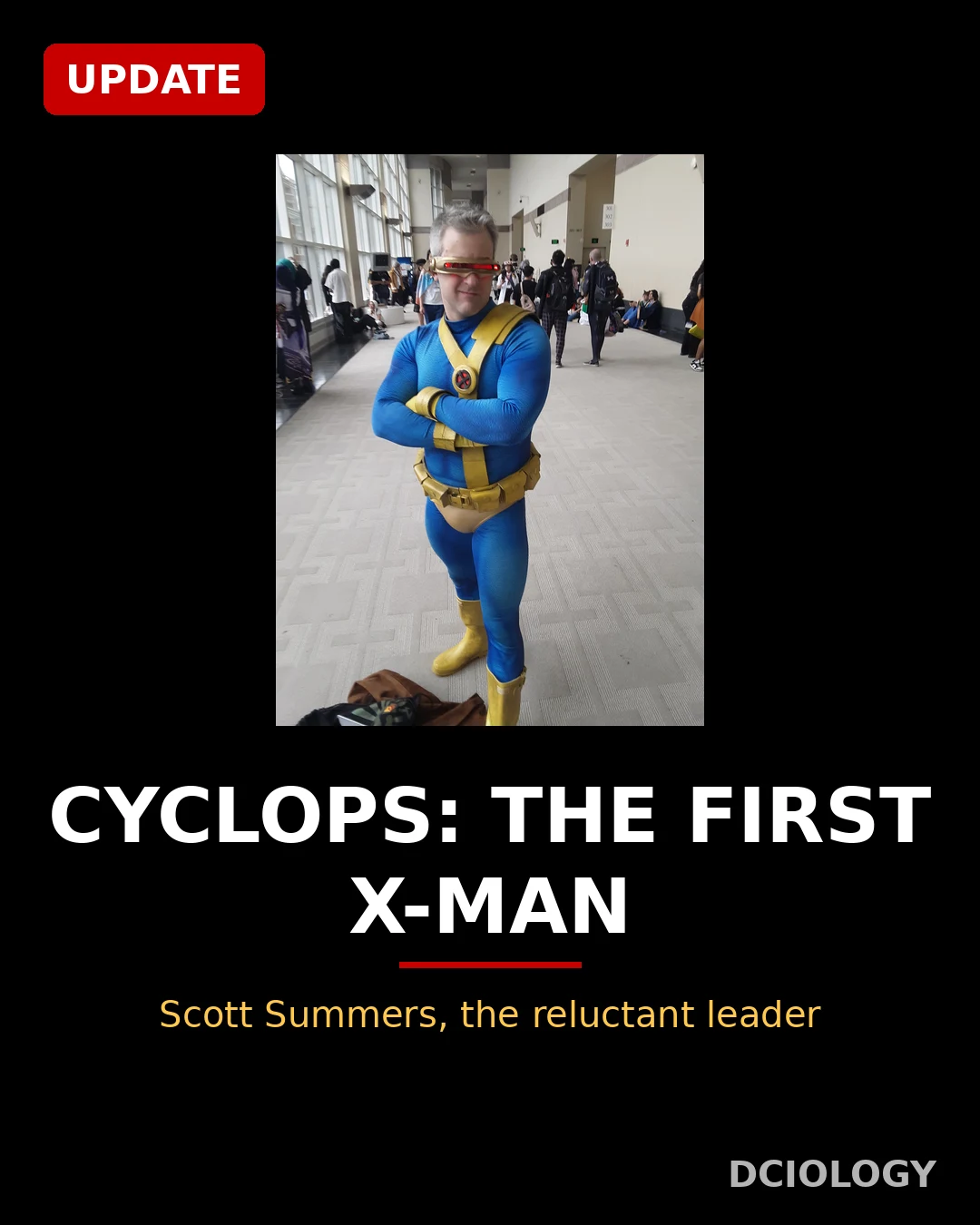
In a Cyclops character analysis, the power itself comes first: Cyclops fires powerful beams of concussive force from his eyes, known as optic blasts. They are not heat or lasers but pure kinetic energy, strong enough to rupture steel and pulverise rock, and he cannot turn them off. Only ruby quartz lenses hold the beams back. It is one of the cruellest powers in comics: a weapon Scott can never put down.
That loss of control shaped his whole personality, and it is the key to any Cyclops character analysis. Scott is disciplined, careful and obsessed with order, because his own body refuses to obey him. Writers have long suggested that his rigid, by-the-book leadership style is a response to the chaos inside his own head. He controls everything else because he cannot control himself.
The Reluctant Leader
No Cyclops character analysis is complete without his leadership. Xavier named Cyclops the team’s leader in The X-Men #7, and Scott has carried the role ever since, through the Dark Phoenix Saga, the Mutant Massacre and the Krakoa era. He is no natural showman; he leads with tactics, preparation and stubbornness. His plans win battles, and his willingness to make ugly choices has made him one of Marvel’s most argued-about heroes.
Storm once beat him for the leadership in a Danger Room duel, but the team always comes back to Scott. He is the one Xavier chose to carry on his dream of peace between mutants and humans, and the one who kept carrying it when Xavier himself faltered.
Scott, Jean and Wolverine
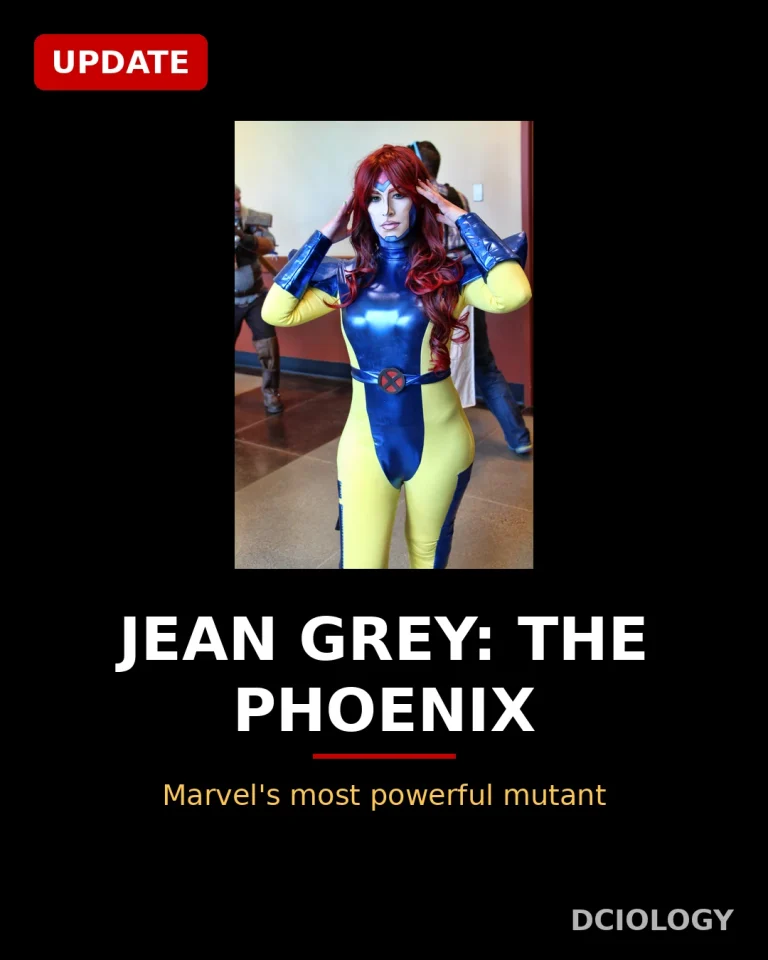
A Cyclops character analysis must cover Scott’s great love, Jean Grey, his fellow original X-Man. The two solidified their relationship in X-Men #98 and married in X-Men volume 2 #30 in March 1994, one of the longest-running romances in comics. When Jean died as the Phoenix in the Dark Phoenix Saga of 1980, Scott left the team to grieve. Their bond survived death and resurrection, and even a clone: Madelyne Pryor, a copy of Jean, became Scott’s wife and the mother of his son Nathan, the future Cable.
The third corner of the triangle is Wolverine, whose feelings for Jean put him at odds with Scott for decades. In the comics the rivalry runs deep, and on screen it defined the original X-Men films, where James Marsden’s Scott was too often reduced to the other man. The truth is simpler: Scott and Logan respect each other as soldiers, even when they cannot stand each other as men.
Cyclops on Screen and His MCU Return
On screen, the Cyclops character analysis turns to James Marsden, who played Cyclops in X-Men in 2000, X2 and X-Men: The Last Stand, with a cameo in Days of Future Past, while Tim Pocock played a young Scott in X-Men Origins: Wolverine and Tye Sheridan took over for X-Men: Apocalypse and Dark Phoenix. Fans have long complained the films never gave Scott his due, killing him off-screen in The Last Stand. The comics always knew better: Cyclops is the X-Men’s backbone.
Now Marsden is set to return as Cyclops in Avengers: Doomsday in 2026, a long-awaited second chance on the biggest stage. A Cyclops character analysis ends with the same lesson his whole history teaches: the man with the uncontrollable power is the one who learned control, and the reluctant leader is the one who never quit.
For more character deep dives, read our coverage of Vision Character Analysis and Avengers Doomsday Behind the Scenes.