VisionQuest Explained: Marvel’s White Vision Series on Disney+ and Why It Closes the WandaVision Trilogy
Five years after WandaVision changed what a Marvel television series could be, its most haunting loose end finally has a home. VisionQuest, starring Paul Bettany, picks up White Vision — the rebuilt android who flew away at the end of WandaVision with memories he could remember but not quite feel. It is a strange, melancholy premise, and exactly why it works.
VisionQuest premiered on Disney+ in the United States on October 13, 2026, at 9 p.m. Eastern Time, with the first two episodes arriving together. International viewers followed a day later. The eight-episode season uses paired episodes in its opening weeks before moving to single episodes, building to a finale on November 10 in the US and November 11 internationally.
The series is created by Terry Matalas, best known for Star Trek: Picard, and it completes a trilogy that began with WandaVision in 2021 and continued with Agatha All Along in 2024. WandaVision was a story about grief, told through sitcom history. VisionQuest asks the other side of the question: what happens to the person — or machine — left behind when the illusion ends?

To understand White Vision, revisit that ending. In WandaVision, Wanda Maximoff created a magical reality around Westview, and inside it a version of Vision lived again. Outside it, S.W.O.R.D. had rebuilt the original Vision’s body as a pale, weaponised android. When the two Visions met, Wanda’s Vision used the Ship of Theseus thought experiment — if every part of a ship is replaced, is it still the same ship? — to restore White Vision’s memories. White Vision then flew away, alone.
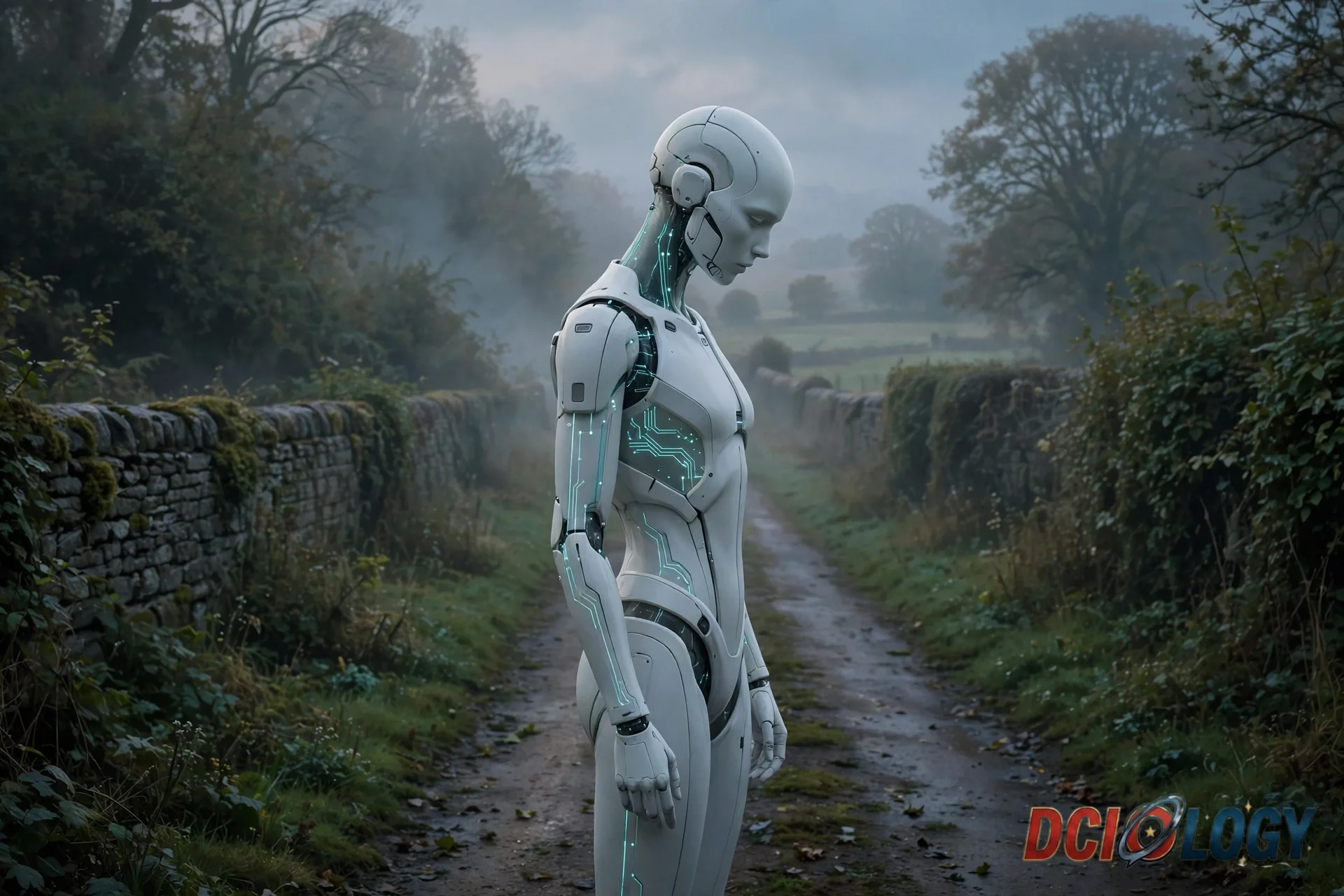
VisionQuest begins with that loneliness. Rebooted and determined not to be turned into a weapon again, Vision has been living in hiding, searching for new meaning. He is not quite the warm Vision of the Avengers films, nor a blank machine — a being who knows what love and loss felt like, without being sure he can feel them now.
That inner conflict becomes literal in the series’ boldest idea. Vision consults the AI personas embedded in his programming, including J.A.R.V.I.S., F.R.I.D.A.Y. and E.D.I.T.H. Most dangerously, he also carries Ultron inside his own mind. James Spader returns as Ultron, more than a decade after Avengers: Age of Ultron, as both a chilling human-like presence and in classic robotic form — not just a villain waiting in the wings, but a voice questioning Vision’s choices.

Vision’s quiet exile does not last. A bounty is placed on his head, forcing him onto the run — and into the path of Thomas Shepherd, played by Ruaridh Mollica. Thomas is a mysterious teenager who may be the reincarnation of Tommy Maximoff, one of Wanda and Vision’s twin sons. Whether he is truly Tommy is a central mystery.
Around them, the cast fills out a tense chase. Todd Stashwick plays Paladin, a skilled mercenary hired to track Vision down. T’Nia Miller plays Jocasta, another android who mirrors Vision’s search for identity. James D’Arcy returns in connection with J.A.R.V.I.S. If Vision is captured, he could be weaponised again — and if Ultron gains control, the consequences could be far worse.
What sets VisionQuest apart is its patience. The opening episodes, titled No Strings and Theseus, lean into atmosphere and character rather than rushing to the next crossover. The most gripping scenes are quieter: Vision trying to live an ordinary life, talking to voices only he can hear, and wondering whether restored memories are enough to make a soul.

For new viewers, you do not need a perfect memory of every Marvel film to follow the story, though a refresher helps. WandaVision is the essential starting point, followed by Avengers: Age of Ultron, where Vision was created, and Avengers: Infinity War, where he died at Thanos’ hands. Agatha All Along adds context, but VisionQuest stands on its own.
That is ultimately why VisionQuest matters. Marvel has told plenty of stories about heroes saving the world. This one asks a smaller question: after the world has moved on, how does a hero save himself? Whether the finale answers that, or leaves it unresolved, will decide whether it is remembered as a curiosity or one of Marvel’s most thoughtful series.