Joker Character Analysis: Why Batman’s Greatest Villain Never Stops Evolving
The Villain Who Mirrors the Hero
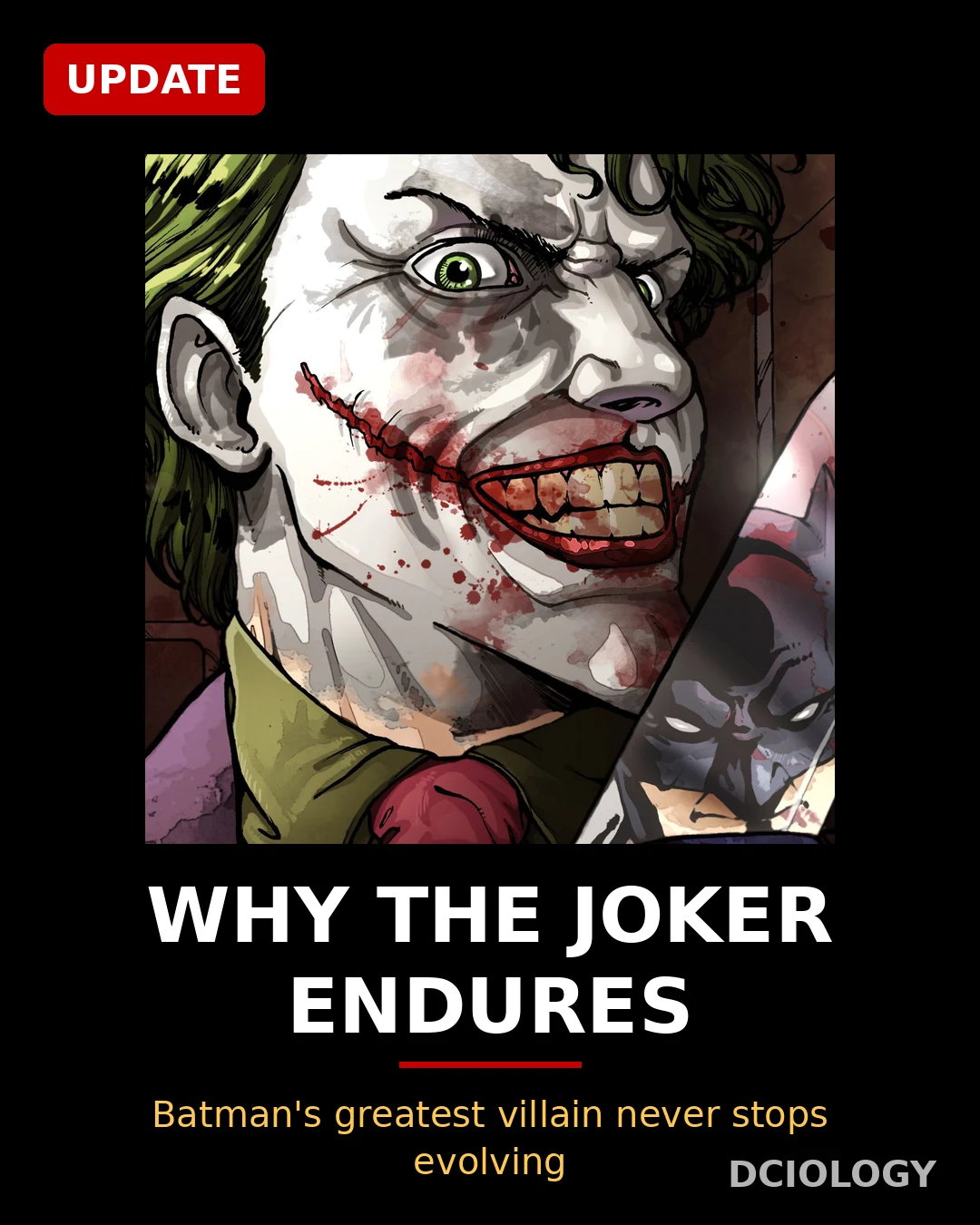
Every great hero needs a great villain, and Batman has never had a greater one than the Joker. He is not Batman’s most powerful enemy. He is not the richest, the strongest, or the most organised. Yet he remains the most feared, the most discussed, and the most enduring. The reason is simple: the Joker is not just an obstacle for Batman. He is a mirror, reflecting everything Batman tries to control, resist, or deny.
Batman represents order, discipline, and purpose. The Joker represents chaos, impulse, and meaninglessness. Where Batman plans, the Joker improvises. Where Batman follows a code, the Joker delights in breaking every rule. Their conflict is not only physical. It is philosophical. Each story asks whether order can survive chaos, and whether a man who refuses to kill can defeat an enemy who refuses to stop.
Humour as a Weapon
The Joker’s humour is central to his menace. He laughs when others would panic. He turns violence into a joke, and jokes into threats. Audiences expect villains to be serious, angry, or cold. The Joker can be playful and terrifying at the same time, which makes him unpredictable.
His humour also serves a purpose in the story. It challenges Batman’s seriousness. Batman treats crime as a problem to be solved. The Joker treats it as a punchline, suggesting that Gotham’s systems are absurd and that Batman’s mission is futile. That taunt cuts deeper than any weapon, because it attacks Batman’s beliefs rather than his body. The Joker does not only want to defeat Batman. He wants to prove him wrong.
Why the Joker Keeps Changing
The Joker has survived for decades because he changes with the times. In lighter eras, he was a colourful rogue, more mischievous than monstrous. In darker eras, he became a horror figure, a reminder that evil does not always need a grand plan. In modern stories, he often reflects anxieties about society, media, and violence, becoming a mirror for the world outside Gotham as well as inside it.
This adaptability is rare. Many villains become dated when the culture around them changes. The Joker avoids that fate because his core idea is timeless: chaos versus order, laughter versus control, freedom versus responsibility. Writers can dress that idea in different styles, tones, and genres, but the central tension remains. As long as Batman stands for order, the Joker will have a reason to exist.
A Cultural Icon Beyond Comics
Beyond Batman stories, the Joker has become a cultural icon in his own right. His grin, his laugh, and his distinctive appearance are recognised even by people who have never read a comic. He appears in films, games, animation, and countless works of art. Each new portrayal sparks debate about which version is definitive, and that debate itself proves his staying power.
Part of that appeal lies in his freedom. The Joker is not bound by the rules that limit other characters. He can be funny, frightening, tragic, or absurd, often within the same story. Audiences are drawn to that unpredictability, even when they are disturbed by it. He represents the part of human nature that resists control, and that idea remains compelling across cultures and generations.
Why He Never Stops Evolving
In the end, the Joker endures because he is not a single character frozen in time. He is an idea that keeps finding new forms. Each era gives him a new voice, a new look, and a new way to challenge Batman. Yet the heart of the character stays recognisable: a laughing figure who asks whether order is real, whether morality is fragile, and whether one bad day can change everything.
Batman may defeat the Joker in any given story, but he can never fully defeat what the Joker represents. That is why the villain keeps returning, and why audiences keep watching. The Joker never stops evolving because Batman never stops standing for something, and as long as that conflict continues, Gotham’s greatest villain will remain impossible to ignore.
Related reading: Lex Luthor character analysis and Paul Atreides character analysis.