
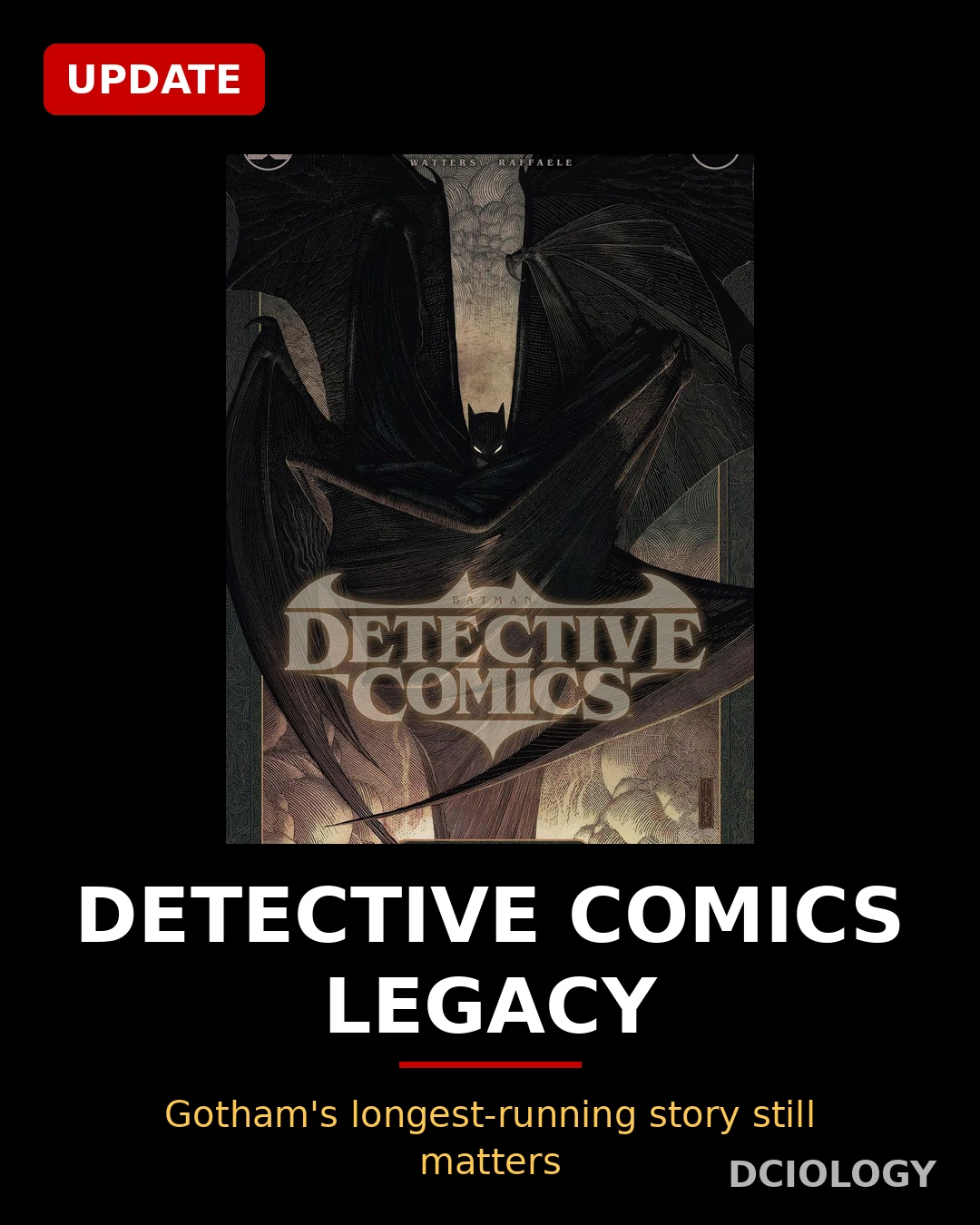
Detective Comics and Batman: Why the World’s Longest-Running Superhero Comic Still Matters
The Book That Gave Batman His Name
Long before Batman became a global icon, he was introduced in the pages of Detective Comics. That simple fact still shapes how fans talk about him. The letters DC in DC Comics come from this very title, which means Batman did not just appear in a comic book. He helped define the company that would publish him for generations. When readers pick up a modern issue, they are holding a continuation of one of the longest unbroken publishing traditions in superhero history.
What makes that longevity remarkable is not only the number of issues. It is the way the book has reinvented itself while keeping its core identity. Detective Comics has always been, at heart, a mystery book. Even when the stories grew larger, darker, or more cinematic, the best runs returned to a simple question: what kind of detective is Bruce Wayne, and what does Gotham reveal about him?
More Than a Superhero Title
Many superhero comics focus on power, spectacle, and scale. Detective Comics has room for those things, but its strongest stories slow down. They follow clues, interrogate witnesses, study crime scenes, and let atmosphere do the work. Gotham is not just a backdrop in these stories. It is a living place, full of rain, shadows, corruption, and ordinary people trying to survive. That grounded feeling is why Batman often feels different from heroes who operate on a cosmic stage.
The title has also been a home for experimentation. Writers and artists have used it to test new tones, new villains, and new versions of familiar characters. Some runs lean into noir, with Batman as a shadowy investigator working through a city that never sleeps. Others lean into horror, psychological drama, or large ensemble stories featuring Gotham’s wider cast. The book can change its voice without losing its soul, because the detective framework is flexible enough to hold many kinds of stories.
Why Batman Needs the Detective Side
Modern Batman stories often highlight his gadgets, his wealth, and his combat skills. Those elements matter, but they are not what makes him unique. Plenty of heroes are strong. Plenty are rich. Far fewer are defined by how they think. Detective Comics reminds readers that Batman’s greatest weapon is observation. He notices what others miss. He connects details that seem unrelated. He understands people, including criminals, well enough to predict what they will do next.
That emphasis also keeps Batman human. He does not have superpowers to fall back on, so every investigation carries risk. A wrong deduction can cost lives. A missed clue can let a villain escape. The tension in a great Detective Comics story comes not from whether Batman can punch harder, but from whether he can think clearly under pressure. That is a very different kind of heroism, and it remains compelling decades after his debut.
Why It Still Matters
In the end, Detective Comics matters because it proves that longevity and quality can go together. A book does not survive this long by accident. It survives because readers keep finding something worth returning to: a compelling hero, a rich city, and stories that respect their intelligence. Batman may appear in countless other titles, but Detective Comics remains his home base, the place where his detective identity is tested and renewed.
For new readers, it is an excellent starting point. For longtime fans, it is a reminder of why they fell in love with the character. And for comics as a medium, it stands as proof that a single title can evolve across eras without losing its heart. That is a rare achievement, and it is why Detective Comics and Batman still matter today.
Related reading: Absolute Batman #25 sales record and Lex Luthor character analysis.