Fantastic Four Comic vs Movie: How First Steps Remade Marvel’s First Family
Marvel’s First Family, Reintroduced
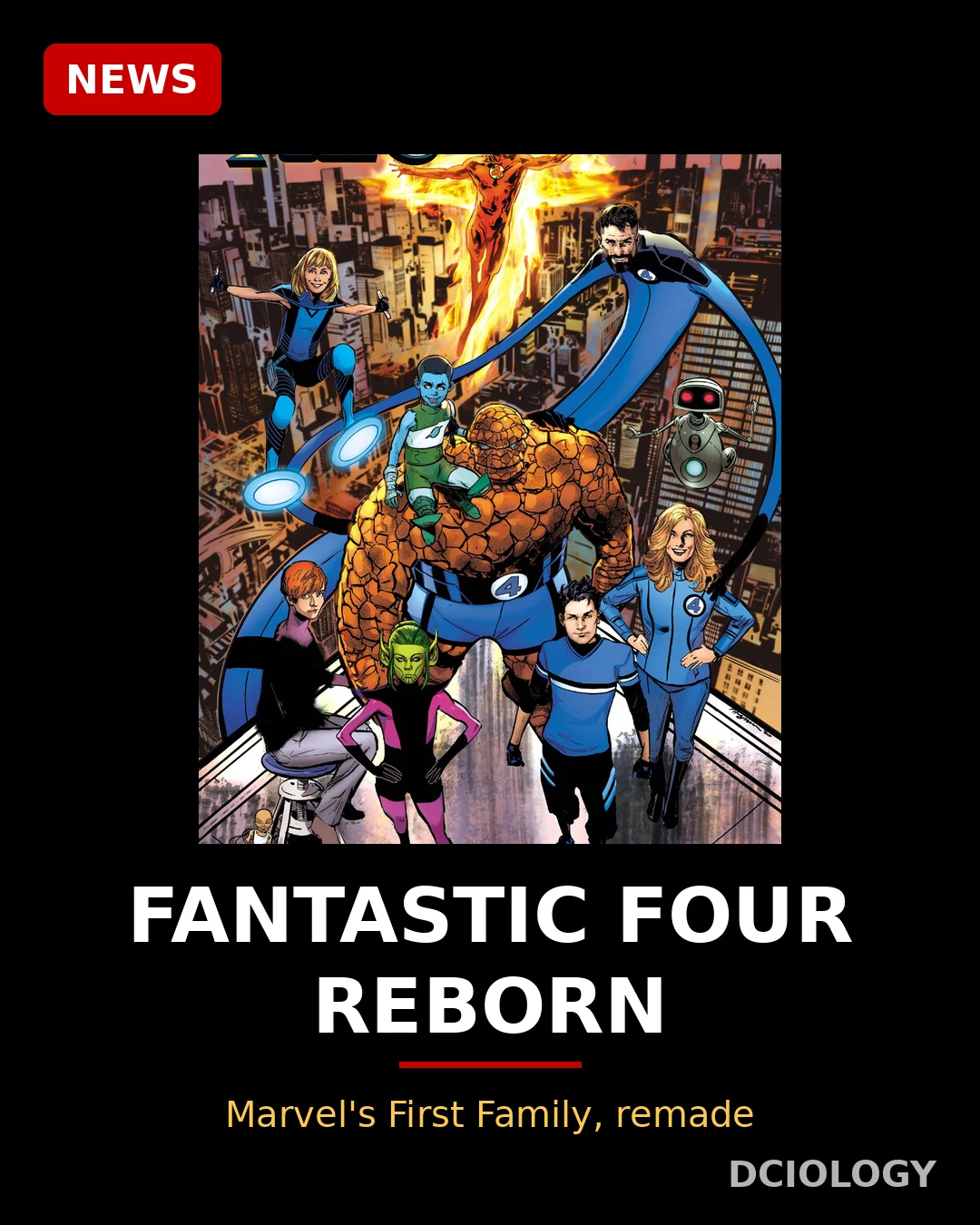
The Fantastic Four are not just another superhero team. In the comics, they are Marvel’s first family, the characters who launched the modern Marvel Universe in 1961. Reed Richards, Sue Storm, Johnny Storm, and Ben Grimm were scientists and explorers before they were heroes, and that identity has always set them apart. They argue at the dinner table, they make mistakes, and they face cosmic threats together as a family. Any film version has to capture that warmth alongside the spectacle, or it misses the point entirely.
That is why First Steps carried so much pressure. Previous adaptations struggled to balance humour, science, and family drama. The MCU version reportedly chose a different path: skip familiar origin beats, drop the team into a world where they are already established, and let relationships drive the story.
The Comics: Science, Family, and Wonder
In Stan Lee and Jack Kirby’s original comics, the Fantastic Four felt revolutionary because they were flawed and human. Reed could be distant and obsessive. Ben wrestled with his transformed appearance. Johnny was impulsive. Sue, often underestimated at first, grew into the team’s emotional and strategic anchor. Their adventures mixed space exploration, strange dimensions, and domestic comedy in a way no other comic was doing at the time.
Later runs deepened that formula, exploring Reed’s blind spots, Sue’s leadership, and the family’s public role. Villains like Doctor Doom worked because he was Reed’s mirror: brilliant, proud, and unable to admit fault. The best comics know the real drama is often inside the Baxter Building, not just in space.
The Movie: A Retro-Futuristic Reset
First Steps leans into a retro-futuristic world, a stylistic choice that immediately separates it from other MCU films. Instead of trying to fit the team into the present-day Marvel universe, it imagines a 1960s-inspired future full of optimism, clean design, and scientific wonder. That setting echoes the comics’ original era while giving the film its own visual identity. It also helps explain why this team feels different: they belong to a world that still believes in exploration.
The film also appears to trust the audience more than earlier versions did. Rather than spending half its runtime explaining how the team got their powers, it focuses on who they are now. That mirrors how comic readers often meet the team mid-adventure, with history revealed through character moments.
What Changed, and What Stayed the Same
Some changes are inevitable when moving from page to screen. Comic timelines span decades, with sprawling casts and shifting continuity. A film must compress that history into a single, coherent story. First Steps reportedly streamlines supporting characters and reframes certain threats to serve the family’s arc. Those choices may frustrate purists, but they are often necessary for pacing and clarity.
What matters most is what stayed the same. The core dynamics remain recognisable: Reed’s intellect and stubbornness, Sue’s strength and compassion, Johnny’s charm and recklessness, and Ben’s humour masking real pain. If those relationships feel true, audiences will forgive changes to plot details. The comics have themselves reinvented the team many times, proving that fidelity is about character, not about copying every panel.
Why This Comparison Matters for the MCU
The Fantastic Four’s success matters beyond one film. They are a bridge to Marvel’s cosmic future, to villains and concepts that could shape the next saga. A version that works gives Marvel a team with a distinct tone: hopeful, scientific, and family-centred. A version that fails would leave a major gap in the MCU’s foundations.
Comparing comics and film therefore reveals more than differences in plot. It shows how adaptation works at its best, when filmmakers keep the soul of the source material while finding a new language for the screen. For a broader sense of how Marvel and DC adaptations handle that challenge, see our Green Lantern comics vs Lanterns series (Green Lantern comics vs Lanterns series) comparison and our look at Man of Tomorrow. First Steps, at its best, suggests Marvel finally understands its first family. The comics gave them wonder; the movie gives them a new home.