
Why Logan Is Still Marvel’s Most Human Hero
A wolverine character analysis has to start with a simple contradiction: Logan is a killer who keeps choosing to be good. For more than fifty years, Marvel’s clawed mutant has snarled, smoked, fought and bled his way through comics and film, yet readers keep coming back to him not for the violence, but for the wounded man underneath it. Short, gruff and haunted, he has become one of Marvel’s most enduring heroes.
A Wolverine Character Analysis Begins With Pain
Logan first appeared in the final panel of The Incredible Hulk #180 in 1974, with his full debut in #181. Created by Len Wein, Roy Thomas and Herb Trimpe, and designed by John Romita Sr., he began as a mysterious Canadian agent. Born James Howlett in 19th-century Canada, he joined the X-Men in Giant-Size X-Men #1 in 1975, an outsider even among outsiders.
His powers explain both his strength and his suffering. A healing factor lets him survive wounds that would kill anyone else, while heightened senses make him a peerless tracker. Bone claws, later coated in adamantium by Weapon X, turned his body into a weapon. That program also stole his memories, leaving fragments, nightmares and PTSD that writers have explored for decades.
The Berserker With a Samurai Code
This wolverine character analysis keeps returning to the same line: he is the best there is at what he does, and what he does is not very nice. Logan is a berserker capable of terrifying rage, yet he holds himself to a samurai code of honour, discipline and loyalty. He does the dirty work so others can stay clean, taking on missions the X-Men cannot admit they need.
For all his talk of being a loner, Logan cares deeply. He has mentored younger mutants, protected children, and became a teacher and headmaster of the Jean Grey School. He pretends he wants to be left alone, then turns up whenever someone he loves is in danger. He claims he needs no one, yet keeps building a family wherever he goes.
Old Man Logan and the Cost of Violence
The darkest chapter in any wolverine character analysis is Old Man Logan, the 2008-2009 story by Mark Millar and Steve McNiven. In a wasteland ruled by elderly villains, an older Logan has retired from violence and refuses to unsheathe his claws. Tricked by Mysterio into killing his fellow X-Men, he carries a guilt he can never escape. The story strips away heroics and asks what is left when a killer puts down his weapons.
Logan, the 2017 film, borrows that story’s pathos without copying it. An aging Logan’s healing factor is slowing as he cares for an ailing Charles Xavier and protects a young mutant girl. It is a farewell, quiet and brutal by turns, and it works because it treats Logan as a tired man, not an invincible icon. Xavier’s role in the X-Men’s deaths differs from the comic, but the grief is the same.
Hugh Jackman Made Logan Immortal
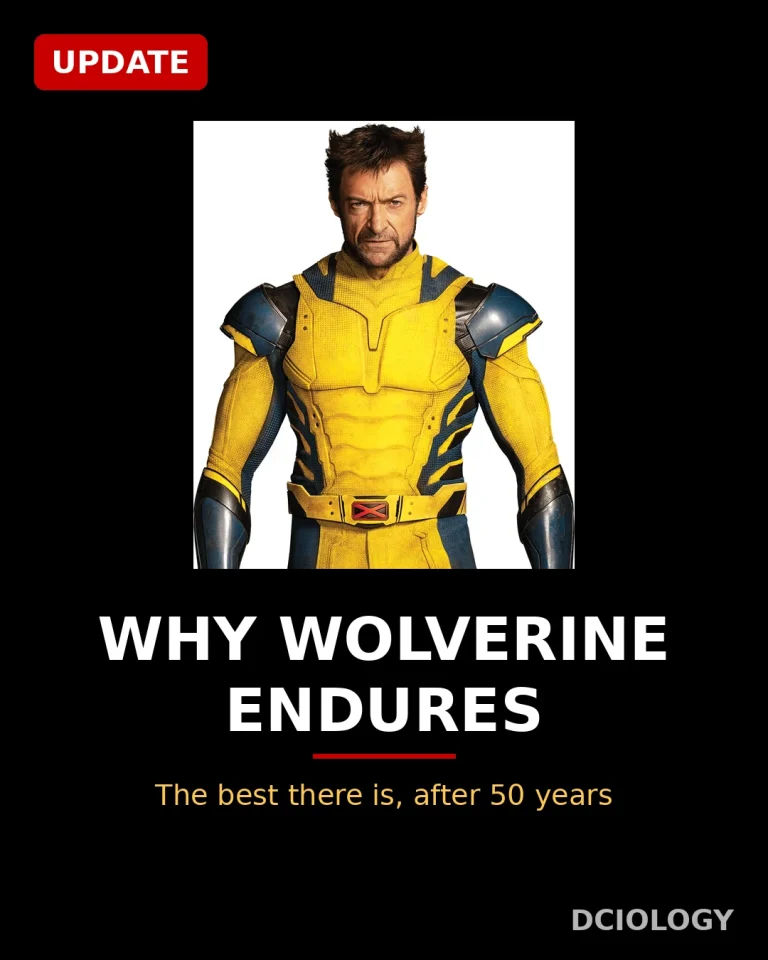
No wolverine character analysis is complete without Hugh Jackman, who has played the character since X-Men in 2000, holding the role for nearly 25 years. He gave Logan warmth, humour and vulnerability beneath the growl, turning a comic-book brawler into a screen legend. His return in Deadpool & Wolverine in 2024 finally put him in the yellow suit and cowl. For how the character moved from page to screen, see our Wolverine comic vs movie legacy.
Why Logan Still Matters
Logan also changed what a hero could be. A flawed anti-hero who smokes, drinks and struggles with his nature, he made flawed heroes cool and helped define the modern age of comics. Even now he endures: AIPT’s 2026 X-Men power rankings placed Wolverine at #5.
In the end, this wolverine character analysis comes back to purpose and identity — killing machine, teacher, father figure, or lost soul between vengeance and mercy? Though he may never see himself as fully good, his purpose lies in goodness, in protecting others and choosing, again and again, to be better than his past. That choice is why Logan remains Marvel’s most human hero. His fellow X-Men face the same questions, as our Cyclops character analysis shows.